UK
 US
Environment & Sustainability
Sustainability at Walker's
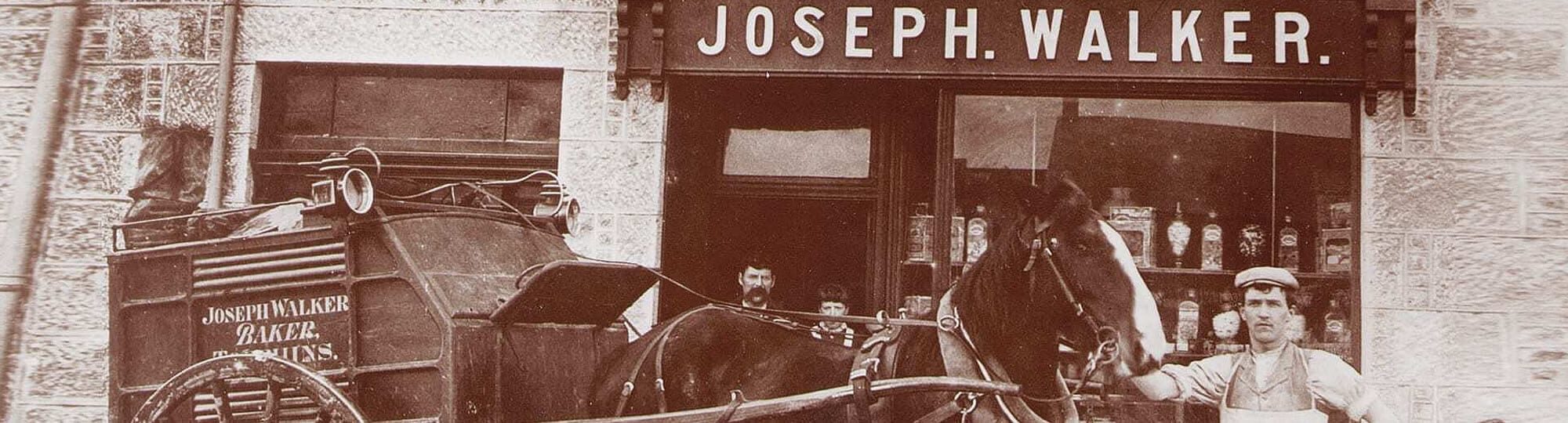
As a family-run business for over 100 years, Walker’s has always maintained its faithful commitment to its homegrown roots in the stunning Speyside region of the Scottish Highlands, ensuring a conscious concern for the food we produce, the welfare of the local workforce, working environment and its important relationships with local suppliers and businesses.
Being one of the largest employers in a small area, the Walker family has developed a social responsibility and mutual inter-dependency with the local community. People are at the heart of our business and it has always been natural for Walker’s to operate in a caring fashion by looking after our workforce. Many contemporary attitudes to business are practices that Walker’s have been carrying out for over 100 years.
Walker’s are continually striving to develop strong social and environmental policies that ensure the Company continues to meet the many international standards for product safety whilst simultaneously protecting the environment and their workforce.
Business Specific Achievements
- Walker’s Shortbread is baked with no genetically modified ingredients, artificial colours, flavours, preservatives or hydrogenated fats.
- The Company is a member of the Roundtable on Sustainable Palm Oil, for sourcing palm oil from sustainable forests. All of the Palm Oil Walker’s use is certified sustainable.
- No bovine growth hormones are given to the free range grass fed dairy cows that produce the rich, creamy milk that becomes the butter used in our shortbread recipe.
- 100% vegetarian; no animal fats are used in any of Walker’s recipes. The Company is also a member of the Vegetarian Society.
- Raw ingredients are sourced locally where possible.
- Support local trades, businesses and charities.
- Committed to the Ethical Trading Initiative.
- We believe great shortbread deserves great chocolate. That's why we choose Fairtrade chocolate, made with quality cocoa ingredients rather than substitutes made with hardened vegetable oils.
Factories
Walker’s Shortbread operates four factories in Aberlour and two in nearby Elgin.
An energy-efficient induction lighting programme was successfully implemented and has now been completed through the delivery of an LED replacement programme. As part of this project, over 1,300 lighting units were replaced with LED alternatives, improving energy efficiency across the site. The LED and induction lighting uses 50% less energy than conventional lighting. LED lighting also reduces the number of lighting units required by nearly 40%, resulting in a much lower energy and resource requirement to meet our lighting needs, while maintaining the high visibility levels required for continual visual quality checks.
Energy efficient condensing boilers have been installed in all four factories at the Aberlour site giving a 40% energy efficiency saving compared to traditional boilers. At our Elgin site 6 old boilers were upgraded with energy efficient boilers. At our Aberlour site 2 old large boilers were upgraded with smaller more energy efficient boilers.
The original village bakery in Aberlour has been adapted as a test bakery for new product development in support of the business.

Packaging
- The gauges for film, cardboard, tin plate and plastic have all been reduced where permissible and practicable.
- Extensive work carried out on reductions to both primary and secondary packaging.
- The cardboard for selected cartons is sourced through the Forest Stewardship Council to ensure sustainability.
- Plastic (rPET) – includes a recycled content in excess of 50% and can be recycled.

Energy
- Members of the government controlled CCA (Climate Change Agreement) since inception in 1998. We have reduced our carbon emissions (CO2e per tonne of production) by over 13% since the baseline year.
- Electricity use monitored every half hour to identify areas for improved efficiency.
- Building management systems installed in our two newest factories.
- Changed oven fuel from oil to gas reducing carbon emissions.
- Reduced wasted ‘heat up’ and ‘cool down’ times to achieve optimum oven temperatures only when needed for baking.
- Specialist oven survey has been carried out to save energy, whilst ensuring optimal performance.
- Where possible energy efficient control systems are fitted to existing / new machinery, for example motor inverters and soft starts for fans.
- All air compressors are fitted with new variable speed drives.
- Heat recovery system has been integrated into the compressed air system, in one of the factories.
- Replacing old inefficient centralised boilers for smaller energy efficient on demand boilers.
Solar Panels
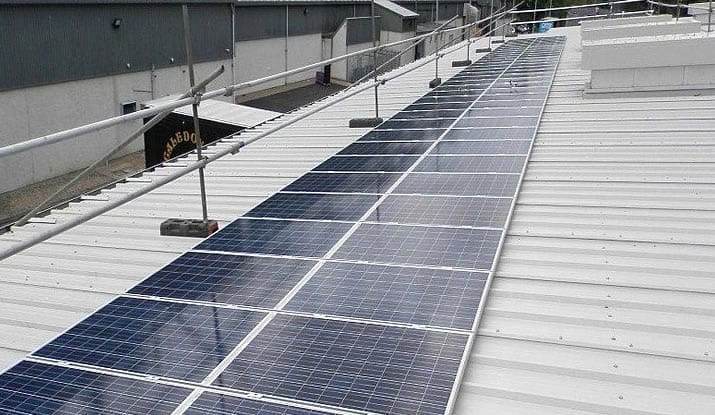
As part of the Company’s on-going commitment to environmental improvement, in 2013 Walker’s installed 80 solar panels on the roof of the newest factory. They are currently producing clean, green renewable energy for the site.
It is a 20 kW system and is on target to produce an average of 12,000 kWh (units) of electricity per annum. The panels will continue to produce electricity and have a life expectancy of 25 years or more.
Since instalment (in 2013), the PV panels have avoided over 200 tonnes of CO2 from being released into the atmosphere.
Water
- We understand the need to value water as a precious resource and manage it throughout all our Company operations to ensure that it is not wasted.
- We have a water use monitoring programme.
- Water use is monitored weekly against production figures and readings are recorded weekly.
- Fitted timers, auto taps and spray nozzles to hand-wash stations in processing areas.
- Toilet-flush reduction programme implemented.
- Full compliance with government controlled waste water regulations.
- Changing water arrangements has minimised as far as practically possible the volumes of water used per annum, while maintaining necessary hygiene standards.
- Not only do we monitor water use in our own operations, but also that of our suppliers. We are working with our suppliers to assess and reduce water use where possible in our supply chain and encourage sustainable water use practices.
Waste
- 95% of total waste currently recycled.
- Paper, cardboard, food waste, plastic, metal, aluminium, tins and wood all recycled.
- No food waste is sent to landfill. Food waste is recycled for animal feed; and fat processed for use as agricultural fertiliser.
- Director set, annual Company objectives, to reduce and review waste.
- Wastewater Treatment Plant: We have recently invested in a substantial treatment plant to process wastewater collected at our Aberlour site. This is to ensure that we comply with the limits set by Scottish Water.
- The installation of a SuDS basin (Sustainable Drainage System) has provided a way to mimic the natural drainage process by managing surface water runoff.
Transport
- Complimentary bus travel arranged for around 600 shift employees each day, to and from work.
- Utilisation of local hauliers whenever possible. Implement full-load deliveries and full usage of back-fill on return journeys when possible.
- Speed limit restrictors fitted on fork-lift trucks .
- Responsible driving training for staff to ensure safety and improve economy. (Driver CPC – Certificate of Professional Competence).
Air
- Nitrous Oxide emissions from our Diesel HGVs has been reduced by 88% through the addition of AdBlue.
- We have reduced the number of diesel FLT we have on site by replacing diesel with electric vehicles where possible, this will reduce not only the release of Nitrogen Oxides but also particulate matter, Hydrocarbons and Carbon Monoxide.